New Targeted Treatment for Some Early-Stage Breast Cancers

Breast cancer is the most common cancer in women in the United States and the second greatest cause of cancer-related deaths. An estimated 270,000 women are diagnosed with it each year. Breast cancer is usually highly treatable when found early on, but even then, about 30% of women will progress to stage IV (metastatic) disease despite treatment.
The BRCA Gene
BRCA1 and BRCA2, also known as tumor suppressor genes, are two genes that play a role in fighting cancer. When these genes are working properly, they can prevent breast, ovarian, and other types of cells from becoming cancerous and multiplying.
BRCAgene mutations are found in 3% to 5% of all breast cancer patients. They are more common among people with triple-negative breast cancer (TNBC), Ashkenazi Jewish heritage, a significant family history of breast and/or ovarian cancer, and younger women with breast cancer.
New Drug Being Developed to Treat Early-Stage HER-2 Negative Breast Cancers in Patients with BRCA Gene Mutations
Women with early-stage HER-2 negative breast cancer and hereditary BRCA1/BRCA2 mutations were included in the OlympiA trial. Despite standard treatments, they were all at a high risk of breast cancer recurrence.
Participants in the study had received standard breast cancer treatments, including:
– Lumpectomy or Mastectomy
– Chemotherapy
– Radiation
– Endocrine therapy
For one year, patients were randomly assigned to receive olaparib or placebo (sugar tablets) pills twice a day.
Olaparib is a type of medication known as a PARP inhibitor. PARP (poly adenosine diphosphate-ribose polymerase) is a DNA-repair enzyme. When this enzyme is blocked by PARP the inhibitor, BRCA-mutated cancer cells die due to increased DNA damage.
The study found that that “among patients with high-risk, HER2-negative early breast cancer and germline BRCA1 or BRCA2 pathogenic or likely pathogenic variants, adjuvant olaparib after completion of local treatment and neoadjuvant or adjuvant chemotherapy was associated with significantly longer survival free of invasive or distant disease than was placebo.” The 3-year cancer-free survival was about 86% for women who took olaparib to 77% of women who received placebo.
Conclusion
The FDA has already approved Olaparib for the treatment of BRCA-related malignancies of the ovaries, pancreatic, and prostate, as well as metastatic breast cancer. Based on the findings of this study, FDA clearance for BRCA-related early-stage breast cancer is expected soon.
These findings show that taking olaparib after finishing standard therapy could be a suitable option for women with early-stage HER-2 negative breast cancer who have an inherited BRCA gene mutation and are at high risk of cancer recurrence.
FDA Adds New Patient Checklist to Safety Guidelines for Breast Implants
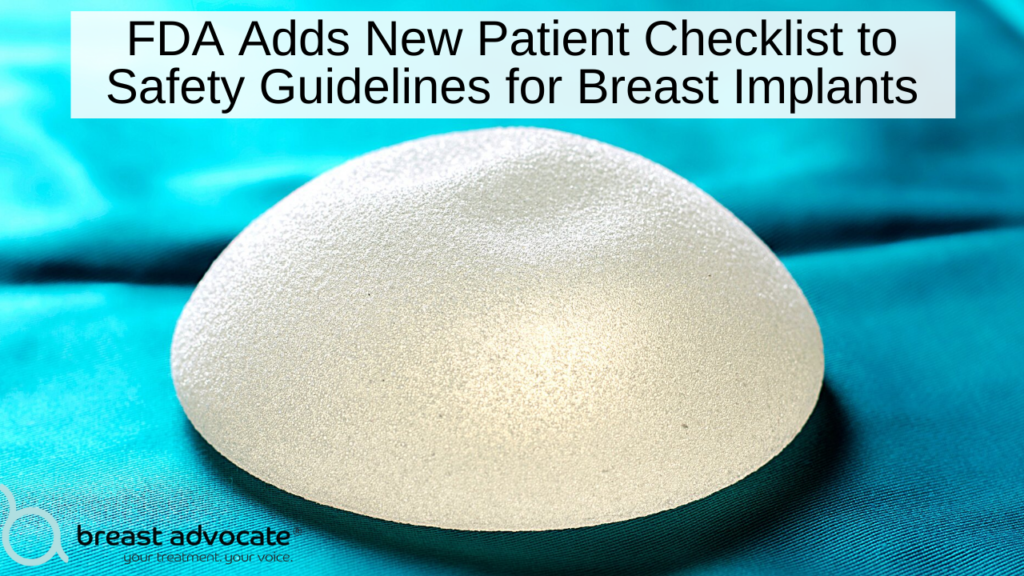
According to a statement published by the U.S Food and Drug Administration, the agency has taken various efforts to improve the communication of risks associated with breast implants to patients and to help those considering the surgery make a more fully informed decision.
The FDA will now restrict the sale and distribution of breast implants to health care providers that utilize the patient decision checklist to ensure that patients are educated about the risks associated with having breast implants.
“Protecting patients’ health when they are treated with a medical device is our most important priority,” said Binita Ashar, M.D., director of the Office of Surgical and Infection Control Devices in the Center for Devices and Radiological Health.
“The agency has approved new labeling for all legally marketed breast implants that includes a boxed warning, a patient decision checklist, updated silicone gel-filled breast implant rupture screening recommendations, a device description with a list of specific materials used in the device, and a patient device card,” explained the FDA.
What is the Patient Decision Checklist?
The creation of a patient decision checklist is at the heart of the new labeling. Every health care professional must examine the checklist with the prospective patient to verify the patient knows the risks, benefits, and other information concerning the breast implant device. The patient must also be given the option to initial and sign the checklist, and the physician implanting the device must also sign it.
The FDA also provided updated information on the progress of postapproval studies. According to the agency, these steps were taken to assist patients in understanding the risks and benefits of breast implants and making more educated health decisions.
“A medical device’s labeling is intended to enhance, but not replace, the physician-patient discussion of the risks and benefits of breast implants that uniquely pertain to individual patients,” the FDA states.
You Have Other Options!
Implants can provide great breast reconstruction results but patients having a mastectomy should also know they may be candidates for other non-implant opinions. These include other types of breast reconstruction using the patient’s own tissue (known as ‘flaps’), and aesthetic flat closure (going flat).
If you would like to learn more about all your surgical options, the Breast Advocate app can help – download it for free today!
Should Breast Cancer Screening for Black Women Start Sooner?
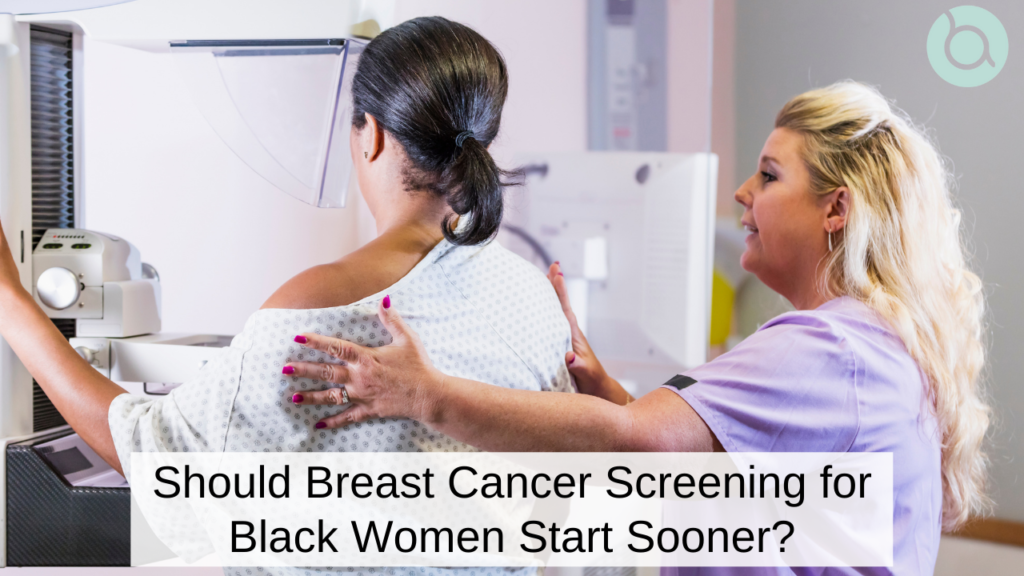
Breast cancer is still the most prevalent cancer diagnosed in women in the United States and the second greatest cause of cancer mortality. According to the American Cancer Society, more than 281,550 new cases of invasive breast cancer and 49,290 new cases of non-invasive breast cancer will be diagnosed this year.
Recent data published by the American Cancer Society shows black women have a 40% higher death rate from breast cancer than white women. The disparity is even greater among women under the age of 50: the death rate among young black women is double that of young white women. Unfortunately, advancements in treatment have not benefited all groups equally.
What Causes the Disparity in Breast Cancer Rates Among Black Women?
Research shows the reasons for the disparity in breast cancer outcomes is complex. Disparities may be explained in part by social, economic, and behavioral factors. Diabetes, heart disease, and obesity are more common among black women, all of which are risk factors for breast cancer. It is becoming more obvious that tumor biology also plays a role. Triple-negative breast cancer and inflammatory breast cancer strike black women disproportionately, and they are more likely to be detected at younger ages and at later stages of the illness.
“It is widely known in the medical community that BRCA1 and BRCA2 mutations are prevalence in the Jewish community, but what is not widely known is that they are also prevalent in Black women,” shares Debra Monticciolo, vice-chair of the department of radiology and chief of breast imaging at Baylor Scott and White Medical Center. “We also know that Black women have higher death rates and these women have a twofold increased risk for triple-negative breast cancer.”
What’s the Solution?
According to research published in Annals of Internal Medicine, biannual mammography screening starting at the age of 40 might lower breast cancer-related mortality among black women by 15%.
“Minority women should begin screening for breast cancer at age 40 years instead of age 45 or 50 years, as they are 72% more likely to be diagnosed with invasive breast cancer younger than the age of 50 years, 58% more likely to have advanced breast cancer at presentation younger than age 50 years, and 127% more likely to die younger than age 50 years compared with white women. We are failing Black women,” continues Monticciolo.
Women with greater resources (such as higher levels of education and wealth) may be better able to take advantage of healthcare breakthroughs. Cities that have tackled this issue by expanding access to state-of-the-art mammography facilities have shown great success in closing the breast cancer mortality disparity between black and white women.
First-of-its-Kind Study to Evaluate Triple Negative Breast Cancer Vaccine

What’s At Stake
According to researchers, triple-negative breast cancer is one of the most dangerous kinds of breast cancer since it does not respond to hormonal or targeted therapy. Studies show that triple-negative breast cancer accounts for 10% to 15% of all breast cancers. It causes a larger percentage of breast cancer fatalities and has a higher rate of recurrence. Black women are also twice as likely to develop this type of breast cancer.
What You Need To Know
The vaccine in the trial targets lactalbumin, a breast-specific lactation protein. After being relocated, this protein is no longer detected in normal, aging tissues, but it is still present in the majority of triple-negative breast tumors. Immune protection against lactalbumin is provided by activating the immune system.
Pre-clinical studies have shown that activating the immune system against this protein has been demonstrated to prevent breast cancers in mice. In animal models, a single immunization could prevent the development of breast cancers while also slowing the growth of existing tumors.
What Is The Objective
In patients with early-stage triple-negative breast cancer, the phase I trial will identify the maximum tolerable vaccination dose.
- Three immunizations will be given to participants, each two weeks apart.
- The study is expected to be completed in September 2022, thanks to the funding from the Departments of Defense.
- According to the clinic, the following trial will include cancer-free people who choose to have voluntary bilateral mastectomies since they are at high risk of getting breast cancer.
“The long-term objective of this research is to determine if this vaccine can prevent breast cancer before it occurs, particularly the more aggressive forms of this disease that predominate in high-risk women.” shares Dr. Tuohy. This vaccine method has the potential to alter the way adult-onset cancers are controlled and improve life expectancy in a way that the childhood immunization program has had.
New Artificial Intelligence System Improves Breast Cancer Detection

Breast cancer is the second most common cancer among women in the United States. As of January 2021, over 3.8 million women have a history of breast cancer in the U.S. Mammography has long been the most frequently used imaging tool for breast cancer screening and early diagnosis, although it has its limitations.
Artificial Intelligence
Researchers from New York University have built a revolutionary artificial intelligence (AI) system to increase breast cancer imaging accuracy. To assist physicians in diagnosing, the computer software was programmed to spot patterns among hundreds of breast ultrasound pictures, according to a recent study.
The artificial intelligence tool has improved radiologists’ ability to accurately diagnose breast cancer by 37% when evaluated on 44,755 previously conducted ultrasound tests. Furthermore, the technique decreases the number of tissue samples and biopsies required to confirm tumors by 37%.
The Research Behind The Study
The AI system was created and tested using the NYU Breast Ultrasound Dataset, which contains 5,442,907 pictures from 288,767 breast US tests (including screening and diagnostic exams) gathered from 143,203 patients at NYU Langone Health in New York between 2012 and 2019.
“Our findings highlight the potential of AI to improve the accuracy, consistency, and efficiency of breast ultrasound diagnosis,” explains Farah Shamou, NYU Engineer. “Importantly, AI is not a replacement for the expertise of clinicians. However, the powerful, complementary role that AI systems can play as a decision support tool leads us to believe that they should and will be increasingly translated into clinical practice.”
Ultrasounds are a less expensive option that is offered at more community clinics. According to experts, it is better than mammography in penetrating dense breast tissue to distinguish healthy cells from malignancies since it doesn’t expose the patient to radiation.
Working Through The Kinks
However, the technology has resulted in many false breast cancer diagnoses, causing patients to worry and go through unnecessary surgeries. Many breast ultrasound scans that suggest symptoms of cancer turn out to be noncancerous following a biopsy, according to research.
“If our efforts to use machine learning as a triaging tool for ultrasound studies prove successful, ultrasound could become a more effective tool in breast cancer screening, especially as an alternative to mammography, and for those with dense breast tissue,” said study co-investigator and radiologist Linda Moy, MD.
What’s To Come
While the team’s preliminary findings seem encouraging, study senior investigator Krzysztof Geras, Ph.D., points out that the researchers’ analysis was limited to prior tests. Before the technology can be routinely deployed, it must undergo clinical testing in present patients and under real-world situations. Geras intends to improve the AI program by including more patient data, such as family history or a genetic mutation linked to breast cancer, in order to estimate risk.
The average accuracy increased to 96% when the AI model was used. The results of all diagnoses were then checked against tissue biopsy results.
Left Breast Radiation May Increase Heart Disease Risk in Breast Cancer Survivors

Radiation therapy is a cancer treatment that uses high energy x-rays to kill cancer cells and shrink tumors. It is often used after breast cancer surgery to reduce the risk of the cancer coming back.
Radiation therapy is routinely recommended for most patients after a lumpectomy. It is sometimes also recommended after a mastectomy depending on the stage of disease and other factors.
Possible Side Effects of Radiation
Radiation therapy is a very effective and widely used treatment for breast cancer. It is very well tolerated by most patients, but as with any treatment, it can have side effects.
Short-term potential side effects which usually resolve within two weeks of completing treatment include:
- Swelling to the breast
- Skin changes to the treated area, eg sunburn, redness, flaking, color changes
- Fatigue
- Pain to the treated area
- Hair loss to the treated area
- Sore throat (if the supraclavicular lymph nodes are treated)
Radiation therapy can also have long-term side effects:
- Breast and skin changes such as discoloration, firmness or shrinkage of the breast
- Can increase the risk of complications after breast reconstruction, especially implant-based reconstruction
- Lymphedema – if lymph nodes under the arm are treated, fluid may collect in the arm causing it to swell
Very rare long-term side effects can include:
- Rib fracture
- Lung inflammation or fibrosis
- Heart problems
- Increased risk of a second cancer (eg angiosarcoma)
Coronary Artery Disease
A recent study specifically evaluated the risk of heart problems in breast cancer survivors who had undergone radiation therapy. The study analyzed 972 women under the age of 55 when diagnosed with stage I or II invasive breast cancer between 1985 and 2008. The study found that women who had radiation therapy to their left breast, the same side of the body as their heart, had twice the risk of coronary artery disease (10.5%) compared to those who had radiation to their right breast (5.8%).
Coronary artery disease leads to decreased blood flow to the heart muscle. This can lead to chest pain (angina), shortness of breath, an abnormal heartbeat, heart failure, and even a heart attack (myocardial infarction).
“Our study adds to the growing evidence that left-sided radiation therapy is an independent risk factor for future heart disease after treatment for breast cancer”, said study co-author, Dr Gordon Watt. “It is important that clinicians caring for younger breast cancer patients communicate the importance of radiation therapy for breast cancer while explaining the need for long-term attention to the risk of heart disease, particularly for women receiving left-sided radiation therapy. Radiation therapy is an indispensable part of breast cancer care, and the good news for breast cancer patients is that modern techniques and computerized treatment planning have reduced the amount of radiation that reaches the heart, thereby reducing the risk of developing heart disease.”
There have certainly been several major advances in the technology and techniques used to administer radiation therapy since the beginning of this study. There are also ways to avoid radiating parts of the chest that don’t need it, like body positioning and breath holding. These techniques and maneuvers weren’t used in the 1980’s. When combining all the advances, the dose of radiation delivered to the heart today is significantly less than during the early years of this study.
Despite the advances, if you are a patient with a left-sided breast cancer, we still strongly recommend you ask your radiation oncologist what techniques they’re using to protect your heart. This will ensure you are decreasing your risk of heart disease as much as possible.
Breast Advocate Named a Top 5 App for Breast Cancer Support

The Breast Advocate app, the world’s first shared decision-making app for breast cancer surgery, is honored to be named among Make Use Of’s top 5 apps to support those diagnosed with breast cancer. Making this list is yet more evidence that Breast Advocate is succeeding in its mission to help educate and support anyone impacted by breast cancer, giving patients a voice in their treatment planning at such a difficult moment in their lives.
The top 5 list was created by Hiba Fiaz who is currently pursing a degree in Medicine and who has a strong interest in technology. The recognition was published by Make Use Of, one of the largest technology publications on the web.
“Being more educated about a health complication, acquiring methods to track it, having the means to get your questions answered, and receiving mental support are all important measures one can take,” said Fiaz when discussing the top 5 breast cancer apps.
“Being mentioned on this distinguished list is an honor. We strive to provide our app users with the information they need in the palm of their hand to make fully informed breast cancer surgery and breast reconstruction decisions,” says Breast Advocate founder Dr. Minas Chrysopoulo. “We hope to continue to extend our reach to women and men across the globe seeking evidence-based information on their many surgical options.”
Breast Advocate was also named as one the best apps “for managing your breast cancer” by Health Central.
Co-created by leading specialists and patient advocates, Breast Advocate is a free breast cancer surgery app that provides ALL your surgical options along with evidence-based recommendations, personalized for you.
Download the Breast Advocate app for iOS or Android HERE.
Do Breast Cancer Patients Need a COVID-19 Vaccine Booster Shot?
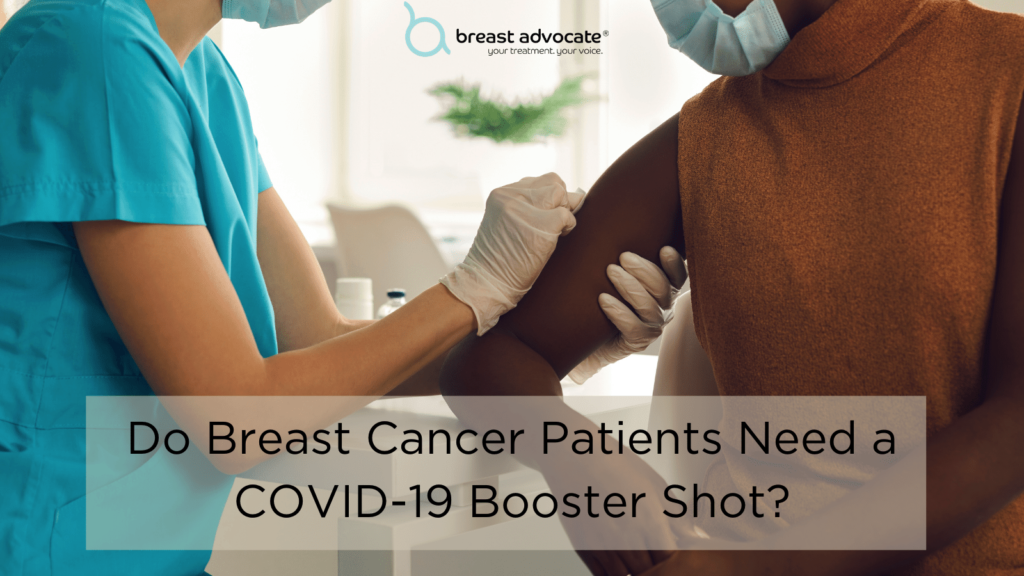
Recently, news of the possible need of an additional COVID-19 vaccine dose has been making headlines. The “booster” shot provides additional protection against severe illness and death from a COVID-19 infection.
This news comes as the rise of the Delta variant is sweeping the nation and largely impacting the unvaccinated and immunocompromised community.
Why is a booster shot necessary?
Studies show that protection against COVID-19 from the first round of vaccine shots may begin to deteriorate after 6-8 months. Research also shows that immunocompromised individuals may have even lower protection following the first round of shots. By taking a third shot of one of the mRNA vaccines (Pfizer or Moderna), protection and immunity against the coronavirus is likely to improve. This not only decreases your chances of getting the virus, but greatly decreases your chances of serious illness or death if you do still get COVID-19.
Who is eligible for a booster?
At this time, the recommendation is that anyone who is immunocompromised should get a booster shot. This includes patients who are in active cancer treatment or have recently completed cancer treatment (chemotherapy and/or radiation). Anyone who has recently been diagnosed with breast cancer falls into this category. It is highly likely that the recommendation will be extended to include everyone at some point soon.
Are there any side-effects from a third COVID-19 vaccine shot?
Reported side effects of an additional COVID-19 shot are similar to the side effects reported for the first two doses.
What if you are unsure about getting a booster?
If you or someone you know is unsure about getting the booster shot, or wondering if they should, it is important to discuss this openly with your healthcare team. The data available from studies so far show the COVID-19 vaccines are safe and effective, but their effectiveness may wane over time and/or they may become less effective with new variants. For those individuals who received the Johnson and Jonhson shot, data is still being collected to see whether an additional shot will be recommended.
How Does Your Age Impact Your Breast Reconstruction Choices?
It is a misconception that patients can be “too old” for breast reconstruction. Age is only one of many factors surgeons take into account when determining if a patient is a good candidate for surgery. In addition, some older women are under the impression their only option is implants. However, this is not necessarily the case either.

What is DIEP flap breast reconstruction?
Ideally, ALL breast reconstruction options should be available to older women. This includes the most advanced breast reconstruction procedure available today—the DIEP flap. The DIEP flap uses the patient’s own lower abdominal skin and fat to recreate a warm, soft, “natural” breast after a mastectomy. The DIEP preserves all the abdominal muscles allowing patients to experience less pain, recover quicker, and maintain their core strength long-term. Sparing the abdominal muscle also lowers the risk of abdominal complications.
Age alone does not disqualify a patient from being a DIEP flap candidate. In fact, a recent study took a closer look at how older women undergoing DIEP flap reconstruction compared to younger women having the procedure. Here’s what the study uncovered…
Is the DIEP flap a good option for older women?
After following 83 DIEP flap breast reconstruction patients over the age of 65, the study found these older patients had similar success and complication rates to younger patients. Likewise, older woman expressed a high satisfaction rate after choosing the surgery.
The authors of the study concluded that the DIEP flap is a safe option for older women and the procedure should be encouraged for breast reconstruction in women over 65 years of age.
“This is something I see reflected in my own practice,” shares Breast Advocate® founder Dr. Minas Chrysopoulo. “Age is only one of many factors I take into consideration when determining which breast reconstruction procedure is best for a patient. Personal motivation as well as physiological age are more important criteria for patient selection than chronologic age alone. Overall health status is far more important. Many of my patients over 65 are very good DIEP flap candidates.”
Ultimately, the best way to determine if you are a candidate for the DIEP flap is to be evaluated by a surgeon experienced in performing these procedures.
Financial Toxicity of Metastatic Breast Cancer On The Rise

The reality of financial strain for breast cancer patients is not new news. A recent study suggests the financial toxicity associated with living with metastatic breast cancer may more than double over the next decade.
A study from the UNC Center for Health Promotion and Disease Prevention predicts that annual costs associated with metastatic breast cancer among United States women will be close to $152.4 billion in 2030. The large increase is due to a rise in the estimated cases of metastatic disease among younger women.
What is the predicted cost of metastatic breast cancer?
The study used the most recent U.S. census data as well as statistics from the National Cancer Institute to estimate how the number of women affected by metastatic breast cancer will change by 2030. Their model estimates a 54.8% increase in metastatic breast cancer diagnoses among women aged 18-64. This would translate to a rise in cases from 158,997 women living with the disease in 2015, to 246,194 in 2030. When combining this estimated data with the predicted annual cost of treatment, the future annual cost of metastatic breast cancer could reach $152.4 billion in 2030.
Funding key to reducing the risk of breast cancer
The study authors are hopeful that these statistics will promote more funding for early detection campaigns, access to care, and new treatments to help cure breast cancer.
Education and access to care are vital to early detection and prompt treatment. There are also many lifestyle factors that patients can consider to reduce their overall risk for developing breast cancer:
- Limiting alcohol consumption
- Maintaining a healthy weight
- Staying physically active
- Breast feeding when possible
- Limiting postmenopausal hormone therapy
As always, it is always very important to follow up regularly with your healthcare team and schedule your annual breast cancer screening appointments as recommended.