Immunotherapy Drug Approved by FDA for Treatment of Triple-Negative Breast Cancer (TNBC)
There was some good news for patients with triple-negative breast (TNBC) cancer recently. Following extensive review, the US Food and Drug Administration (FDA) approved the immunotherapy drug Keyturda for treatment for early TNBC in combination with chemotherapy.
What is Triple-Negative Breast Cancer?
Triple-Negative breast cancer accounts for about 10-20% of all breast cancers. TNBC is not fueled by estrogen, progesterone, or the HER2 protein like most other breast cancer types. This means TNBC does not respond to hormone therapy.
What is Immunotherapy?
Keytruda (pembrolizumab) is classified as an immunotherapy and is used a lot in the medical field to treat other forms of cancers. Immunotherapy is a type of biological therapy that triggers your own immune system to attack disease. Immunotherapy drugs have been approved to treat many types of cancer. However, it is not used as frequently as traditional treatment options such as surgery, chemotherapy, or radiation therapy, or more typically, a combination of these.
Trial Results
Trial data from over 1,000 patients showed that Keytruda, in combination with chemotherapy before surgery and then used as a monotherapy after surgery, helped prolong “event-free survival”. This combination therapy using immunotherapy is the first of its kind to be approved for patients with early-stage TNBC by the FDA.
Does Chemotherapy Increase the Risk of Breast Reconstruction Complications?

For anyone interested in having breast reconstruction, trying to decide the best time to have it can be yet one more overwhelming decision. Generally speaking, you can have reconstruction at the same time as the mastectomy (this is called immediate reconstruction), or any time later (known as delayed reconstruction). Several factors can influence the timing of breast reconstruction surgery. These can include personal choice, access to a plastic surgeon, and other breast cancer treatments like chemotherapy and radiation.
Does Chemotherapy Impact Breast Reconstruction Planning?
Numerous studies show a higher risk of breast reconstruction complications in patients who have radiation, but the impact of chemotherapy on reconstruction is not as clear.
Chemotherapy can be given before surgery (known as neoadjuvant) or after surgery (adjuvant). A recent study published in JAMA Surgery followed 1881 women undergoing breast reconstruction (both implant-based and with autologous flaps). The study evaluated complication rates and patient reported outcomes. Chemotherapy (either before or after surgery) did not increase the risk for complications in patients undergoing breast reconstruction, regardless of technique. Likewise, there was no link between chemotherapy and any adverse patient satisfaction scores or poor psychosocial well-being.
When is the Best Time to Schedule Your Breast Reconstruction?
This information can help empower women needing to make informed decisions regarding breast reconstruction timing in the setting of chemotherapy.
Patients should engage in shared decision-making conversations with their healthcare team to determine the best time for their breast reconstruction based on their individual needs and clinical situation.
For patients looking for help navigating breast reconstruction timing questions with their surgeons, the Breast Advocate® app can help! After taking users individual situation and preferences into account, the treatment Wizard provides evidence-based recommendations to review and discuss with your healthcare team. Download the free app today HERE.
Breast Cancer Pill Reduces Risk of Breast Cancer Recurrence

In a groundbreaking study, a drug called Lynparza (Olaparib) wa found to reduce the risk of breast cancer recurrence in BRCA gene mutation carriers. The pill, which is classed as a PARP inhibitor, was developed by AstraZeneca and Merck.
PARP inhibitors block the cancer cell’s ability to repair its own DNA. This means if a cancer cell is damaged by a treatment like chemotherapy or radiation, it will be unable to repair itself and will die.
New England Journal of Medicine Study
The clinical study, published in the New England Journal of Medicine, began in 2014 and enrolled a total of 1,836 women. All the study participants were carriers of a BRCA gene mutation and had a history of early stage HER2-negative breast cancers. All patients had undergone breast cancer surgery and chemotherapy and were also considered at high risk for breast cancer recurrence based on their tumor size or lymph node involvement.
Half of the study participants were given Lynparza daily for a year. The other half received a placebo. A little over two years after the beginning of treatment, the study found that the women taking Lynparza saw a 42% reduction in the risk of breast cancer recurrence or death. The study also reported that at 3 years after beginning treatment, 85.9% of Lynparza users were still living without evidence of a recurrence, compared to 77.1% of women who received the placebo.
As it stands today, AstraZeneca will be submitting the results of this study to regulators to request approval for use in early-stage breast cancer patients with a BRCA genetic mutation. Currently the drug is approved by the FDA to treat advanced-stage breast cancer in BRCA gene mutation carriers.
Single-Dose Intraoperative Radiation Therapy Improving Breast Cancer Care
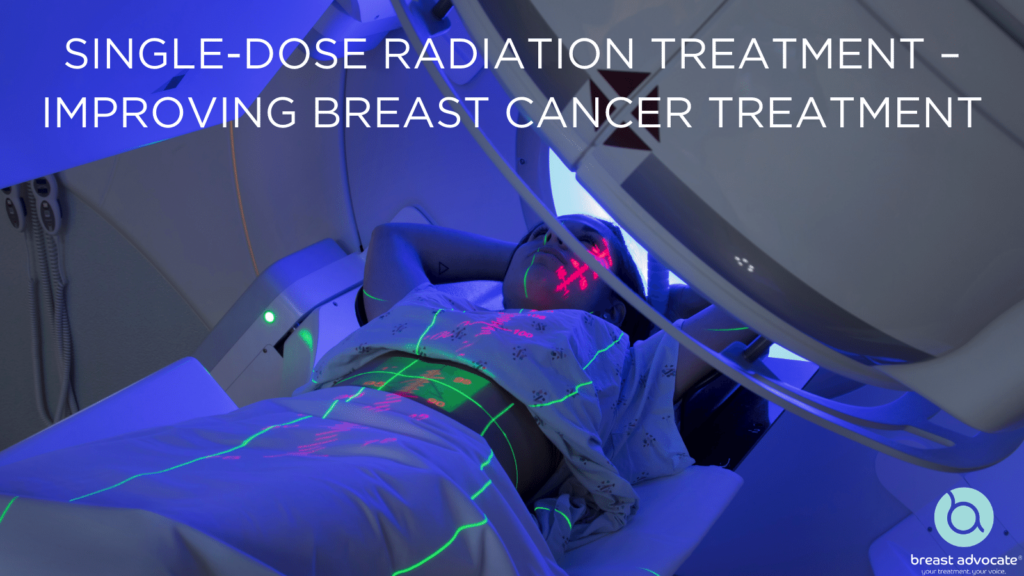
Many breast cancer patients may be able to avoid lengthy radiation treatment according to research published in the British Journal of Cancer. As an alternative to standard external beam radiation therapy (EBRT) performed after a lumpectomy, TARGIT-IORT is a single-dose intraoperative radiation treatment targeting the tumor site immediately following the lumpectomy. The treatment occurs while the patient is still asleep under general anesthesia. This protocol means patients can have their breast cancer surgery and radiation treatment all at the same time.
By targeting the radiation just to the tumor site at the time of the surgery, patients may be able to avoid potentially harmful effects traditional radiation treatments can have on nearby organs. According to the study, delivering TARGIT-OIRT during the lumpectomy also makes the site of the original tumor less conducive for future cancer growth. Other studies show the benefits of this type of radiation treatment including less pain, better cosmetic results after surgery, and fewer changes to the breast shape and skin compared with whole breast EBRT.
For the study, 2,298 women with invasive breast cancer and a tumor size of up to 3.5 cm in diameter were randomly assigned to receive either TARGIT-IORT during lumpectomy or post-operative extended radiation. The trial was run in 32 hospitals across 10 countries.
Intraoperative radiation is safe and effective
The study showed no difference in local recurrence-free survival between the two methods of radiation treatment. Unlike with EBRT, local recurrence with TARGIT-OIRT was not associated with a higher risk of death.
The study found “no statistically significant difference between EBRT and the approach of risk-adapted TARGIT-IORT during lumpectomy, for local recurrence-free survival, invasive local recurrence-free survival, mastectomy-free survival, distant disease-free survival or breast cancer mortality. The mortality from other causes was significantly lower in the TARGIT-IORT arm”.
Based on these study results, single-dose TARGIT-IORT during lumpectomy is an effective and safe alternative to several weeks’ course of post-operative EBRT. Patients who are candidates for single-does radiation can therefore benefit from less time spent in treatment and a faster recovery without comprising their cancer care.
Please remember, it is important to discuss all treatment options thoroughly with your healthcare team before undergoing surgery.
Confused about your options?
Confused about your breast cancer treatment options? Get the help you need with evidence-based information in the palm of your hand – download Breast Advocate® FREE here.
Why All Breast Cancer Patients Should Be Offered Rapid Genetic Testing at Time of Diagnosis
A breast cancer diagnosis brings with it a need for many different treatment decisions. One of the first decisions to consider, is which operation to have to remove the tumor. Surgical options include a lumpectomy, oncoplastic surgery, a mastectomy, or even a bilateral mastectomy (removal of bth the cancer breast and healthy breast). Many women, particularly in the US, often find themselves trying to decide between the least invasive approach, a lumpectomy, or the most aggressive, a bilateral mastectomy with or without breast reconstruction.
Factors such as tumor size, breast size, the location of the tumor, and the type of breast cancer can greatly impact which surgery is recommended. Patients should be given all options and discuss the pros and cons of each procedure with their healthcare team to determine which treatment plan best serves their individual needs.
Bilateral Mastectomy Recommended for Patients at High Risk Due to Genetic Mutation
For patients with a genetic mutation (such as a BRCA1 or BRCA2 mutation), who have a much higher risk for developing cancer in the future, the removal of both breasts is usually recommended as it significantly reduces the risk of another breast cancer in the future. Patients can of course opt to save their healthy breast and instead have close follow up including 6-monthly MRIs, and can also take risk-reducing medication like Tamoxifen.
However, not all patients undergo genetic testing prior to breast cancer surgery to even know they are at higher risk of developing another breast cancer in the future.
Rapid Genetic Testing Offers Patients More Insight When Planning Breast Cancer Surgery
A study published in Annals of Surgical Oncology found that women with a recent breast cancer diagnosis who are offered a rapid genetic test, and who received their results prior to their initial breast surgery, oftentimes chose to have a bilateral mastectomy. In the study, more than 1,000 women were offered a rapid genetic test following a breast cancer diagnosis. Of those who tested positive for a BRCA mutation, over 70% chose to have a bilateral mastectomy, with or without reconstruction.
These test results demonstrate the need for further evaluation of the current model of breast cancer care. Currently, not all women with a breast cancer diagnosis are routinely offered genetic testing. Only those who also have a family history of breast cancer, or are very young at the time of diagnosis are typically referred to a genetic counselor for gene testing.
By offering all women the option of a rapid genetic test at the time of diagnosis, patients would be better informed when making surgical treatment planning decisions.
Personalized Treatment Recommendations in the Palm of Your Hand
The Breast Advocate® app is another great resource for patients weighing their options for breast cancer surgery or breast reconstruction.
Co-created by leading specialists and patient advocates, Breast Advocate® is a free breast cancer surgery app that provides ALL your surgical options along with evidence-based recommendations, personalized for you.
Download the free app HERE.
Breast Cancer Patients Needing Radiation Therapy Face Higher Risk of Implant Reconstruction Complications Requiring Additional Surgery
Implant-based breast reconstruction is the most commonly performed method of reconstruction in the United States today. While the procedure can be performed in one surgery (known as ‘direct to implant’), most women have a 2-stage approach beginning with tissue expanders. These are replaced with a permanent implant a few months later at a second surgery (stage 2).

Implants are a good option for many women but may not be the best choice for some patients. In particular, patients needing radiation therapy as part of their breast cancer treatment should know that radiation increases the risk of complications after reconstruction with implants. Potential complications include infection, capsular contracture (breast hardening), asymmetry, seroma, pain, implant rupture, and implant exposure. In many cases, additional surgery is required to address the complication.
Implants often need to be removed
A recent study published in The Breast Journal found that 44% of women with locally advanced breast cancer who had implant reconstruction needed unplanned implant removal when radiation therapy was part of their treatment plan.
The study followed 52 patients who had mastectomy, implant-based breast reconstruction, and radiation therapy from 2010 to 2017. 44% of the patients in the study had stage III disease, 77% were estrogen receptor positive, and 75% were HER2 positive.
Patients were followed for just over 3 years following surgery and treatment. The average time between treatment and implant removal was only 5 months. In this study, implant removal was required before starting radiation in 17% of the patients, and after radiation was completed in 27% of the patients.
Reasons for implant removal before radiation began were infection (44%), wound breakdown (33%), hematoma (11%), and concern about planned radiation (11%). Reasons for implant removal after radiation included significant breast asymmetry (57%), infection (21%), a deflated expander (14%), and seroma (7%). Some women had bilateral mastectomy and reconstruction – most of the complications in these cases occurred in the breast that underwent radiation therapy.
This study is yet another example of why it is important for patients to be fully informed of the potential risks associated with surgery they choose. Fully-informed patients also tend to have more realistic expectations, which in turn can also improve recovery and the overall satisfaction with the final outcome.
You have other options!
Fortunately, implants are not the only reconstructive option and most women are candidates for alternative procedures. These include other types of breast reconstruction using the patient’s own tissue (known as ‘flaps’), and aesthetic flat closure (going flat).
“Despite the relatively high rate of implant removal reported in this study, salvage reconstruction is feasible,” the study authors noted. “Of the 23 patients who experienced unplanned implant removal, 78% were able to undergo salvage reconstruction with only 5 patients pursuing no further reconstruction at the time of last follow-up.”
If you are facing a similar situation and would like to learn more about your options, the Breast Advocate app can help – download it today!
The Importance of Knowing All Your Breast Cancer Surgery Options
Breast Advocate founder Dr. Minas Chrysopoulo recently joined the C-Sessions podcast for a discussion on breast cancer surgery, breast reconstruction, the potential adverse effects, and the importance of knowing all your surgical options throughout any stage of the breast cancer treatment journey.
Randall Broad graciously hosted the conversation which included Christine, a breast cancer survivor. Christine openly shared her experience of multiple lumpectomies, an eventual mastectomy, and then multiple attempts to reconstruct her breast with implants. A major contributing factor to Christine’s frustration has been the lack of access to all the information she felt she needed to make fully-informed surgical decisions from the get-go following her breast cancer diagnosis.
Christine’s experience unfortunately isn’t unique. When it comes to breast reconstruction in particular, 1 in 3 women feel they don’t have enough say in their treatment decision-making. The Breast Advocate® app was created to address this problem. Breast Advocate provides all the information patients need to make fully-educated decisions about which procedure is best for them after a breast cancer diagnosis. Download it free here.
Listen to the C-Sessions podcast here.
WHO Global Initiative Aims To Improve Breast Cancer Survival
For patients diagnosed with breast cancer, the 5-year survival rate is above 80% in most “wealthy” countries. Unfortunately, not all countries can boast such statistics. Likewise, even in higher-income countries there are still areas of underserved communities with much lower survival rates.
The World Health Organization (WHO) has announced a new campaign to help improve survival rates in underserved areas. The campaign is called the Global Breast Cancer Initiative. The goal is to reduce breast cancer mortality by 2.5% per year until 2040. These efforts could save the lives of up to 2.5 million people!
The global effort comes at a crucial time. Breast cancer now outranks lung cancer as the world’s most common type of cancer, and is responsible for 1 in every 6 cancer deaths in women.
Breast Cancer Initiative key elements
The Global Breast Cancer Initiative will be comprised of three elements: health promotion, timely diagnosis and treatment, and supportive care.
Health promotions will drive campaigns focused on public education to identify the early signs of breast cancer. Another key focus will be educating the public on lifestyle changes that could reduce their risk of developing breast cancer.
The push for timely diagnosis and treatment will require local government officials and their healthcare providers to address local needs and develop plans of action to provide better patient care. This includes access to surgery, chemotherapy, radiation treatments and pain management services.
“An evidence-based technical package will be provided to countries, linked to online learning platforms and other types of support, and rolled out over the next year. The package will incorporate existing WHO cancer tools and products to promote an integrated approach across cancers and to strengthen health systems more broadly,” shared the WHO when discussing the strategy behind the new campaign.
This campaign will hopefully reach the lives of many women and men across the globe. The importance of education as well as access to breast cancer care and patient support are crucial in making a global impact and saving lives. We applaud this incredibly important initiative and look forward to seeing its efforts come to fruition!
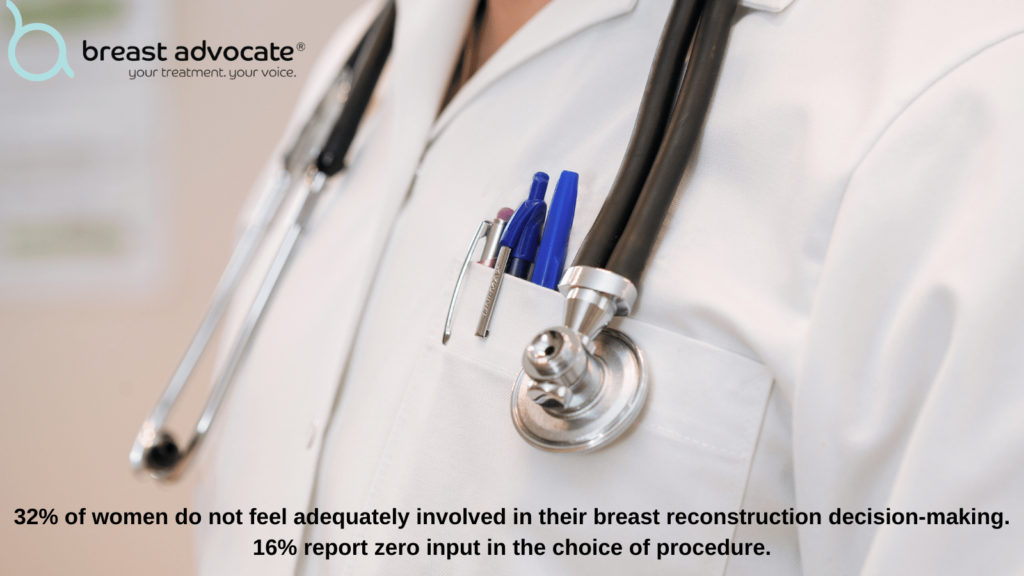
1 in 3 Women Don’t Have Enough Say in Their Breast Reconstruction Decision-Making
Patient’s relationships with their healthcare team can play a major role when it comes to planning medical procedures. In the setting of breast cancer surgeons can greatly influence surgical decision-making. This is particularly the case when it comes to breast reconstruction.
In the largest ever behavioral study focused on breast surgeons and breast cancer patients, results suggest surgeons play a bigger role in breast reconstruction planning than many patients would prefer. The study, published in the British Journal of Surgery, surveyed 53 surgeons, 101 breast cancer nurses, and 689 patients diagnosed with breast cancer.
According to the study, “approximately one in every three women (32%) stated their surgeon had more input than they did, when deciding which type of breast reconstruction to undergo.” Additionally, 16% of women felt they had zero input in the choice of reconstructive procedure they had. We find it very concerning that so many women in this study feel they played little to no role in deciding which type of breast reconstruction was best for them.
The Importance of Shared Decision-Making
This study is yet another example of why shared decision-making is so important, and why we created the Breast Advocate app!
We believe patients should be fully informed of all their breast reconstruction options, as well as the option of aesthetic flat closure (no reconstruction with a nicely-contoured, truly flat result). It is only once all the options are fully discussed, that patients can take part in a shared-decision-making conversation with their surgical team.
Shared decision-making occurs when the health care professional and patient work together to make a treatment decision that is best for the patient. The best decision takes into account evidence-based information about treatment options, the physician’s knowledge and experience, and the patient’s preferences and values. Multiple studies show this collaborative approach improves patient outcomes and satisfaction.
Co-created by leading breast cancer specialists and patient advocates, our free breast cancer surgery app provides evidence-based information and customized surgical recommendations, personalized for each individual user based on diagnosis and personal preferences. Regardless of an individual’s situation, users will have all the information and tools they need to take a more active role in decisions about their treatment.
World Cancer Day 2021
February 4th is World Cancer Day. The purpose of this day is to “inspire change and mobilize action” in the cancer community across the globe. For the past three years, the campaign focus has been “I Am And I Will.” In 2019, the campaign highlighted individuals’ “Commitment To Act”. The inspirational message of “Progress Is Possible” followed in 2020. This year marks the final year of the three year “I Am And I Will” campaign and the focus is “Together, All Our Actions Matter.”
This year’s spotlight reminds us all that our actions have an impact on the world around us. The campaign demonstrates how when we all choose to come together, we can achieve a “healthier, brighter world without cancer.”
Breast Advocate® works with organizations across the globe to help educate and empower women and men during their breast cancer journeys. Through this collaborative approach, our app users can access a vast array of support resources. These include emotional and financial support, legal advice and travel assistance.
Breast Advocate’s mission is to empower patients to have a voice in their breast cancer treatment decisions. Connecting people with resources to help support them in their treatments journeys is part of that purpose.
“We believe our efforts to provide educational and supportive information and resources to individuals navigating breast cancer make a difference in the lives of many,” says app founder Dr. Minas Chrysopoulo. “We hope to continue to brighten the futures of breast cancer communities across the globe and expand our resources to further meet their needs.”
So, this World Cancer Day, how will you try to make a difference in your cancer community?