New Study Links Gut Microbiome to Breast Health

In a groundbreaking study, researchers have uncovered a potential link between the human gut microbiome and breast health. Shedding new light on how diet and lifestyle factors may influence breast cancer risk. The study focuses on the impact of flaxseed components known as lignans, and their interaction between gut microorganisms and the expression of mammary gland microRNAs (miRNAs). Some of which play a role in regulating genes associated with breast cancer.
Insights from Leading Researchers
Jennifer Auchtung, Ph.D., Assistant Professor in the Food Science and Technology Department at the University of Nebraska — Lincoln, emphasized the importance of this discovery. Stating, “The gastrointestinal microbiota plays an important role in modifying many components of our diet to impact human health. In this study, we found correlations between diets enriched in flaxseed, cecal microbiota composition, and miRNA profiles in the mammary gland that regulate many pathways. Including those involved in cancer development. This preliminary study supports further research into the role that the microbiota plays in dietary approaches to reduce risk factors associated with disease.”
Manipulating Microbiota-Mammary Gland Interactions
Investigating whether the relationship between gut microbiota and mammary gland miRNAs could reduce breast cancer risk. Researchers administered flaxseed lignan components to female mice. The cecum (a part of the colon located in the lower right abdomen) was of particular interest. It is believed to play a role in producing short-chain fatty acids and harboring anaerobic bacteria crucial for metabolism.
One of the lignans found in flaxseed oil requires microbial processing to release bioactive metabolites with potential antitumor effects. The study ultimately revealed a significant relationship between the microbiota and mammary gland miRNA, with flaxseed lignans modifying this relationship to be non-cancer-causing.
Elena M. Comelli, Ph.D., Associate Professor at the University of Toronto’s Department of Nutritional Sciences, Temerty Faculty of Medicine, and the corresponding author of the study, expressed optimism. She said, “If these findings are confirmed, the microbiota becomes a new target for preventing breast cancer through diet.”
This study opens the door to further research on gut microbiome in breast health and the potential for dietary interventions. Also, offering new hope for the development of preventive strategies in the fight against breast cancer.
Stay informed and engaged with the latest advancements. Empower yourself with knowledge and make more informed decisions about your breast cancer treatment and care. Visit the Breast Advocate App website today and join us in the fight against breast cancer.
AI Sparks Excitement: Reducing Chemotherapy for Breast Cancer Patients

Groundbreaking AI Tool Outperforms Expert Pathologists
A groundbreaking Artificial Intelligence (AI) tool could revolutionize breast cancer treatment. According to a recent study by Northwestern Medicine, AI could reduce the need for chemotherapy in some patients. The study, published in Nature Medicine, revealed that AI evaluations of patient tissues outperformed expert pathologists in predicting the future course of breast cancer. Potentially sparing patients from the side effects of unnecessary chemotherapy.
Breast cancer is a major health concern. Approximately 300,000 U.S. women are expected to receive a diagnosis of invasive breast cancer in 2023. With one in eight U.S. women likely to face a breast cancer diagnosis in their lifetime. The need for more precise and personalized treatment options is greater than ever.
The Role of Non-Cancerous Cells in Predicting Outcomes
Traditionally, pathologists have relied on the examination of cancerous tissue to determine the severity and treatment approach for breast cancer. However, the Northwestern Medicine study highlights the importance of assessing non-cancerous cells in predicting patient outcomes.
Professor Lee Cooper and the Northwestern University Feinberg School of Medicine research team have developed an advanced AI model. Analyzing both cancerous and non-cancerous elements in breast cancer tissue. It assesses 26 properties to generate overall and individual prognostic scores for cancer, immune, and stromal cells. This detailed analysis offers a clearer picture to pathologists and can assist in creating personalized treatment plans.
One of the most significant implications of this AI tool is the potential to reduce chemotherapy duration. Chemotherapy can come with unpleasant and harmful side effects, such as nausea or heart damage. The ability to tailor treatment more precisely is a welcome development.
Furthermore, the AI tool could allow for treatment adjustments based on real-time tissue analysis. This approach holds promise for improving patient outcomes and reducing disparities in breast cancer care. Great news for those diagnosed in community settings with limited access to specialized pathologists.
The study was made possible through collaboration with the American Cancer Society (ACS). The AI model was trained with the help of medical students and pathologists worldwide. Students contributed thousands of annotations of cells and tissue structures in digital images of patient tissues.
Validation and Future Developments
As Northwestern Medicine transitions to using digital images for diagnosis, the AI model’s integration into routine breast cancer assessment could become a reality soon.
In addition, the research team is developing AI models tailored to specific breast cancer types, including triple-negative or HER2-positive. Enhancing the accuracy of predictions and provide deeper insights into breast cancer biology.
Funding Support for Promising Research
This promising research is supported by grants from the National Cancer Institute of the U.S. National Institutes of Health, marking a significant step toward a more personalized and effective approach to breast cancer treatment.
Stay informed and engaged with the latest advancements. Empower yourself with knowledge and make more informed decisions about your breast cancer treatment and care. Visit the Breast Advocate App website today and join us in the fight against breast cancer.
New Research Reveals Potential Breakthrough in Fighting Breast Cancer Metastasis

In a groundbreaking study, scientists from Penn State have uncovered crucial insights into how breast cancer cells invade healthy tissues. Shedding light on potential new ways to combat the deadliest aspect of cancer: metastasis. This discovery has the potential to revolutionize cancer treatment and offers fresh hope for patients battling breast cancer.
The research, led by Penn State’s Erdem Tabdanov, assistant professor of pharmacology, and published in the journal Advanced Science. It marks a paradigm shift in our understanding of cancer cell motility. The study reveals that a motor protein known as dynein plays a pivotal role in powering the movement of cancer cells.
Erdem Tabdanov explained the significance of this discovery. He states, “Until now, dynein has never been caught in the business of providing the mechanical force for cancer cell motility, which is their ability to move themselves. Now we can see that if you target dynein, you could effectively stop motility of those cells. Therefore, stop metastatic dissemination.”
Collaboration Across Institutions
The study originated as a collaboration between Penn State’s Department of Chemical Engineering and Penn State’s College of Medicine. Eventually it expands into a multi-institution partnership. Including researchers at the University of Rochester Medical Center, Georgia Institute of Technology, Emory University, and the U.S. Food and Drug Administration.
To understand the mechanics of breast cancer cell movement, researchers utilized live microscopy. Helping to observe the migration of live breast cancer cells in two different systems modeled after the human body.
Dynein’s Role in Cancer Cell Movement
The first system, is a two-dimensional network of collagen fibers. It demonstrated how cancer cells move through the extracellular matrix, powered by dynein. Dynein was identified as a key player in this process, shedding light on its significance in cancer cell movement.
Amir Sheikhi, assistant professor of chemical engineering and biomedical engineering at Penn State, emphasized the importance of their findings. Sheikhi says, “Instead of killing the cancer cells with radiation or chemotherapy, we are showing how to paralyze them. This is great news because you don’t really have to kill the cells. […] A harsh approach that targets both cancerous and healthy cells. Instead, you just have to stop the cancer cells from moving.”
Promising Implications for Patient Treatment
Tabdanov added that this “cell paralysis” approach could prove to be a more effective treatment strategy for cancer. Particularly after the surgical removal of the tumor, it could prevent cancer from spreading without causing harm to healthy tissues.
Compared to traditional chemotherapy, which aims to eliminate cancer cells at a faster rate than the rest of the body, this innovative approach focuses on containment rather than destruction. “The trick with chemotherapy is to kill the cancer cells slightly faster than the rest of the body — it’s a race against time,” Tabdanov noted. “Chemotherapy causes a lot of damage to the body’s normal, healthy tissues while it is busy killing the cancer. If we instead contained the cancer, stopped it in its tracks, we could keep the healthy parts of the body healthy.”
This groundbreaking research offers new hope in the fight against breast cancer, metastasis and provides a promising avenue for the development of more targeted treatments. Further studies and clinical trials will be needed to translate these findings into practical applications. However this discovery represents a significant step forward in the battle against breast cancer.
By staying informed and engaged with the latest advancements, you can empower yourself with knowledge and make more informed decisions about your breast cancer treatment and care. Visit the Breast Advocate App website today and join us in the fight against breast cancer. Together, we can work towards a brighter and healthier future for all those affected by this challenging disease.
3D Modelling Technique Helps Understand Complex Breast Cancers Better
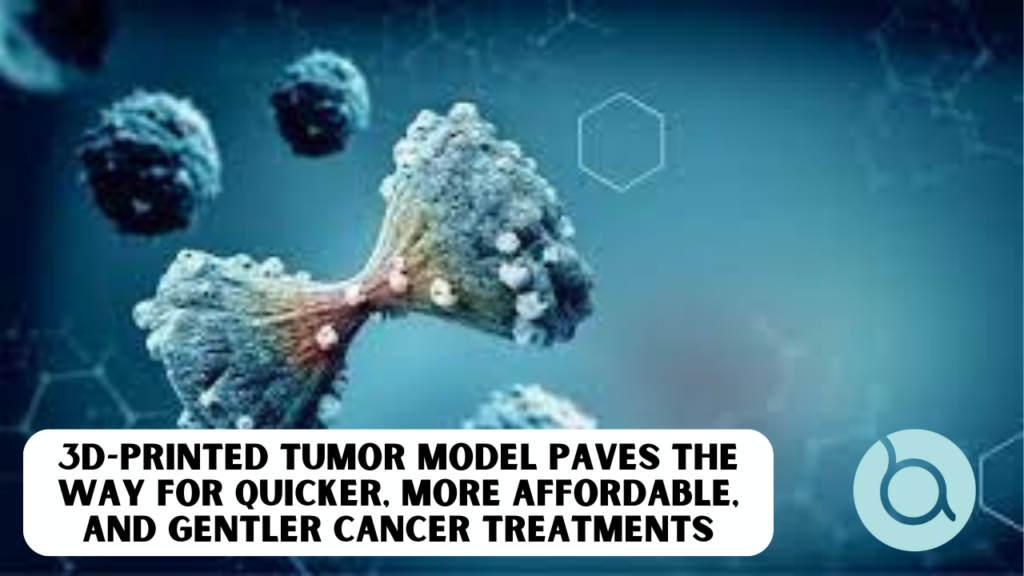
3D Modelling of Complex Breast Cancers
Researchers at the University of Waterloo have developed a new way to better understand complex cancers using advanced 3D modelling techniques. This breakthrough might change how doctors approach treatment, especially for breast cancer.
What’s the big deal?
- In the past, scientists studied cancer by growing the cells in flat dishes. This method, however, didn’t fully represent how the cancer looks and behaves inside the body.
- Now, with a combination of modern bioprinting and microfluidic chips (tiny structures that imitate the flow of blood around a tumour), researchers can create a more accurate 3D model of the cancer. This means they can study it in a way that’s closer to how it really is in the body.
Why is this especially important for breast cancer patients?
Breast cancer is tricky. When it spreads, it forms complex tumours with different types of cells. This new 3D model helps researchers understand these complex tumours much better. The old way, which relied on just a sample or two, sometimes missed the full picture, leading to treatments that might not work as well.
How did they do it?
- They made tiny structures (microfluidic chips) that act like the environment around a real tumour.
- They grew different cancer cells in a special mixture (called bioink) that keeps them alive.
- Using a machine similar to a 3D printer, they placed these cells onto the chips, creating a living 3D model of the cancer.
What’s the end goal?
This advanced 3D model can be used to test treatments, like chemotherapy drugs. It’s a step forward in finding more effective treatments for breast cancer and other complex cancers, potentially leading to better outcomes for patients.
In short, this research offers hope for improved breast cancer treatments and a deeper understanding of the disease. Every new piece of research brings hope and better understanding. This latest finding might be a step closer to ensuring more effective and prolonged treatments for patients. As always, we will keep our community updated on the latest and most relevant information.
Shared Decision-Making: How Patients Feel Predicts Treatment Success

The study showed that breast cancer patients’ self-perceptions better indicate treatment effectiveness than clinician tools. The research also underscores the crucial role of shared decision-making in treatment strategies.
The study found that clinicians sometimes overestimate patients’ physical health compared to patients’ self-reports.
The Essence of Shared Decision-Making:
“Shared decision-making, a cornerstone of patient-focused care, involves both the doctor and patient discussing available evidence on the pros and cons of treatment options. This ensures the most suitable and informed choices are made,” Lead author Natansh Modi, an NHMRC PhD candidate at Flinders University’s Clinical Cancer Epidemiology Lab, stated.
The clinician uses the ECOG PS tool, while patients use PROs to share their perspectives during the decision-making process.
Study Findings:
Published in ESMO Open, this research combined data from numerous trials, observing nearly 3000 patients treated for HER2-positive breast cancer.
Mr. Modi elucidated, “We deduced that several patient-reported outcomes, notably regarding physical and mental health, were pivotal in determining the patient’s survival rate, cancer progression, or severe side effects during treatment.”
This study suggests patient data predicts treatment outcomes better than clinician scores. “About 70% of patients deemed ‘fully active’ by their clinicians actually reported restrictions in their physical health upon self-evaluation,” Modi remarked.
Mr. Modi concluded, “This research indicates that patient-reported physical well-being surpasses clinician-evaluated ECOG PS in predicting prognosis. It’s crucial for clinical practice to evolve, placing more weight on the patient’s viewpoint.”
Future Implications:
Integrating patient surveys with clinician evaluations can elevate shared decision-making in cancer care and refine future clinical trial designs.
Given these findings, it’s crucial for breast cancer professionals to prioritize patient insights and shared decision-making in treatment. To truly harness the potential of a patient-centric approach, we urge professionals to visit tolimanhealth.com. The platform offers resources and tools specifically designed to facilitate the creation of personalized shared decision-making tools for patients. By integrating these tools, clinicians can better align treatments with patients’ real-time experiences, fostering improved outcomes and patient satisfaction.
New Findings Suggest a Potential Shift in the Fight Against Breast Cancer Treatment Resistance
Breaking Down the Latest Breast Cancer Treatment Research

Breast cancer cells can sometimes be sneaky. After treatment, a few might not die off completely, but instead “play dead” temporarily, only to bounce back later. Researchers puzzle over why some cells resist treatment. A recent study now offers some insight into this, suggesting a possible game-changer in how we approach breast cancer treatment, Unveiling Tariquidar.
What The Research Says:
- The Sneaky Cells: The study shows that some breast cancer cells enter a ‘safety mode’ after treatment.In this mode, they sort of “play dead” by temporarily halting their growth, changing some of their characteristics, and becoming more resistant to drugs. This is known as a “drug tolerant persister” (DTP) state.
- The Role of P-gp: The protein called P-glycoprotein (P-gp) plays an essential role in this process.When the cancer cells are in this DTP state, they pump up the levels of P-gp, which acts like a safety shield. This protein helps remove harmful molecules produced by drugs like doxorubicin.
- A Potential Solution: The exciting news is that there might be a way to tackle these sneaky cells. The study shows that a drug called Tariquidar can block the action of P-gp. When used alongside chemotherapy, Tariquidar may prevent these cells from bouncing back. In fact, in experiments with mice, using Tariquidar increased their survival rate significantly.
What Does This Mean For Patients?
This discovery may lead to a shift in how we tackle breast cancer treatment resistance. Instead of always trying to fight the resistant cells, the focus might change to preventing them from becoming resistant in the first place.
Furthermore, adding Tariquidar to the treatment regime might offer a better outcome without causing more side effects, since it’s targeting the resistance mechanism directly.
In Conclusion:
Breast cancer treatment is a complex journey. Every new piece of research brings hope and better understanding. This latest finding might be a step closer to ensuring more effective and prolonged treatments for patients. As always, we will keep our community updated on the latest and most relevant information.
Air Pollution and Increased Risk of Breast Cancer – What You Need to Know
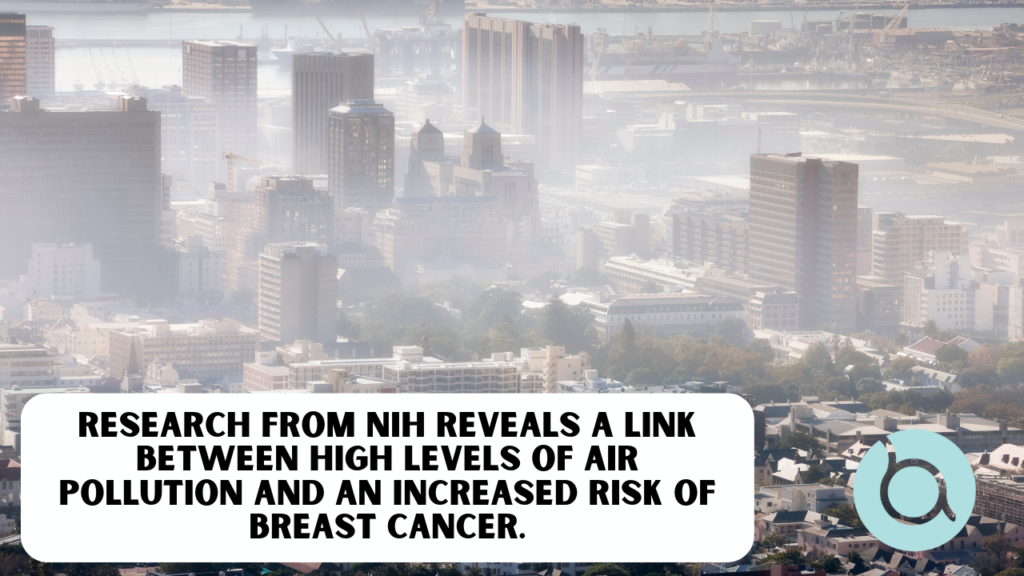
In a new study, researchers from the National Institutes of Health (NIH) have identified a concerning link between living in areas with high levels of particulate air pollution and increased cases of breast cancer. That is to say, this critical research aims to shed light on the impact of environmental factors on health.
Here’s what the findings mean for you:
About the Pollution
The pollution discussed is fine particulate matter. Specifically those particles 2.5 microns in diameter or smaller (PM2.5). These tiny particles, are from sources like vehicle exhaust, combustion processes, and industrial emissions. These can be inhaled deeply into our lungs.
Increased Risk
The study found that women living in areas with higher PM2.5 levels are more likely to develop breast cancer. Specifically, the risk went up by 8% for those in areas with higher air pollution. While this might seem like a small number, it’s significant considering how common air pollution exposure is.
How Can You Check Air Quality?
The Environmental Protection Agency offers a tool called Air Now. By simply entering your zip code, you can find out the air quality, including PM2.5 levels, in your vicinity.
Why This Study is Unique
What sets this research apart is its deep dive into historical air pollution levels. In contrast, many other studies focus only on current pollution levels. Furthermore, cancers, including breast cancer, can take years to develop. Therefore, this broader view may give a clearer understanding of how past air pollution affects current health outcomes.”
Different Types of Tumors
The study discovered that PM2.5 exposure is more linked with ER+ breast cancers. These are the most commonly diagnosed tumors in U.S. women. This hints at a biological process where the particulate matter disrupts our endocrine system.
What’s Next?
This study has offered vital insights. Undoubtedly, the researchers believe there’s more to learn! Especially regarding how different kinds of PM2.5 exposures might affect breast cancer risks in various regions.
The study’s findings emphasize the importance of reducing air pollution and being aware of our environment’s potential health impacts. If you’re concerned about your risk, it may be helpful to speak with a healthcare professional. Also, consider checking air quality in your area.
Stay connected with Breast Advocate to keep up to date with the lastest Breast Cancer News.
Important News for Breast Reconstruction Patients: CMS DIEP Flap S-Code Decision

The Centers for Medicare & Medicaid Services (CMS) has made a decision about how modern, muscle-preserving breast reconstruction procedures like the DIEP flap are coded for billing purposes. This decision comes after receiving valuable feedback from patients and healthcare providers on the plan to sunset the “S-codes”, emphasizing the increasing importance of the patient’s voice and patient advocacy in healthcare policy decision-making.
The CMS Decision
CMS originally planned to sunset the S codes used by surgeons and insurance companies for reimbursement of complex breast reconstruction procedures like the DIEP flap. However, they reversed course after listening to feedback from patients and healthcare providers like your doctors. “We will be maintaining HCPCS Level II codes S2066, S2067, and S2068 and will not sunset their availability on December 31, 2024.”
Why Were The Breast Reconstruction Codes Scheduled To Sunset?
CMS wanted to simplify how they label different breast reconstruction surgeries. They believed that using specific codes could help both doctors and insurance companies communicate better about these procedures. However, they now understand that the changes could have caused confusion and would limited affordable patient access to modern breast reconstruction options through insurance.
What Stays the Same?
CMS has decided not to make any S-code changes for now. The current codes that describe breast reconstruction procedures will remain in place for the time-being. This means that your access and insurance coverage for these surgeries should not be affected for the foreseeable future.
What Does This Mean for You?
If you’re planning to have a breast reconstruction procedure, this news means that you won’t have to worry about any sudden changes in how your insurance covers the surgery. The codes that your surgeon(s) use to bill insurance companies will also stay the same.
What Can You Do?
Keep using your voices and communicating with your doctors and healthcare providers about your breast reconstruction plans. If you have questions or concerns about insurance coverage, please be sure to ask them for guidance. They are here to help you understand your options and the potential impact of any changes in the insurance landscape that could impact your care or access to it. Patient advocacy works!
Revolutionizing Treatment for Breast Cancers: Breakthrough Study Sparks New Hope
August 15, 2023

Researchers from LSU Health (New Orleans School of Medicine), the University of Rochester and Cellestia Biotech AG (a biopharmaceutical company in Switzerland) have unveiled an innovative treatment for treatment-resistant breast cancers. Their study, published in MDPI Cancers, presents exciting findings that could transform the landscape of breast cancer treatment.
Study Findings
The study focuses on two types of breast cancers: estrogen-receptor positive (ER+) and triple-negative breast cancers (TNBC). These cancers can be challenging to treat due to resistance to standard therapies. The research introduces a new approach that combines an experimental oral drug with standard-of-care medications. It is effectively reversing hormone resistance and boosting treatment effectiveness.
The experimental oral drug, known as CB-103, is a product of Cellestia Biotech AG. It works by inhibiting Notch receptors, which play a vital role in transmitting information from cell surfaces to genes. Notch signaling is known to be involved in various cancers, including breast cancers. CB-103 directly targets gene regulation by Notch, setting it apart from previous drugs in the same class. This Innovative treatment approach for treatment-resistant breast cancers also comes with a more favorable safety profile compared to older drugs.
What’s next?
Senior author Lucio Miele, MD, PhD explained, “CB-103 is a next-generation, orally active, clinical-stage drug that, unlike older drugs, directly targets gene regulation by Notch and offers a much-improved toxicity profile.”
Samarpan Majumder, PhD and senior author in the study, emphasized the safety and efficacy of CB-103 in advanced malignancies. “CB-103 has been safe and well-tolerated, showing minimal gastrointestinal toxicity, unlike previous Notch inhibitors,” Dr. Majumder stated.
The study’s significance lies in its potential to overcome treatment resistance. Despite advancements in breast cancer treatment, endocrine resistance still emerges in estrogen-receptor positive breast cancers. Current second-line therapies have limitations and potential toxicities, while third-line treatments are often ineffective. Triple-negative breast cancer, a particularly aggressive subtype, poses a significant challenge, affecting a significant percentage of breast cancer patients.
Plan for Clinical Trials?
“Our translational data will be serving as a foundation for planned clinical trials. We will combine CB-103 with anti-estrogen therapy in ER+ breast cancers with taxanes like taxol or docetaxel in TNBC” adds Dr. Majumder.
The collaborative study involved researchers from LSU Health New Orleans, Cellestia Biotech AG, and the University of Rochester. The research was funded by Cellestia Biotech and the Cancer Crusaders Chair at LSU Health New Orleans. With this promising breakthrough, the future of breast cancer treatment looks brighter, offering hope to patients with treatment-resistant breast cancers.
New Research Offers Hope for Breast Cancer Patients – Mortality Rates Show Steady Decline

A recent population-based study provides valuable insights into long-term breast cancer mortality rates. The research sheds light on the improving prognosis for breast cancer survivors. Advancements in treatment and care have led to increasingly better outcomes over the years.
Favorable Trend in Mortality Rates
The study analyzed data from women in England diagnosed with early invasive breast cancer between 1993 and 2015. The annual breast cancer mortality rate was the highest during the five years following diagnosis. After that, mortality showed a steady decline.
Researchers further delved into each calendar period of diagnosis 1993-1999, 2000-2004, 2005-2009, and 2010-2015. The annual breast cancer mortality rates decreased with each successive calendar period. This indicates a clear trend of improvement in breast cancer management and treatment, leading to higher chances of survival for patients diagnosed with breast cancer.
Decline in Five-Year Mortality Risk
A key finding from the study is the significant decrease in the five-year breast cancer mortality risk over time. For women diagnosed between 1993-1999, the risk was 14.4%. For those diagnosed between 2010-2015, the risk dropped significantly to 4.9%.
The researchers also considered various patient and tumor characteristics among women diagnosed in 2010-2015. They discovered that the cumulative five-year breast cancer mortality risk varied substantially based on these factors. Overall, the 5 year risk of death from breast cancer in patients with a recent diagnosis was under 3% for 62.8% of women. However, the risk remained 20% or higher for 4.6% of women.
Study Take-Aways
This study shows the substantial improvement in prognosis for women with a diagnosis of early invasive breast cancer that has been made since the 1990s. Advancements in treatment modalities are having a favorable impact.
These findings will reassure most women treated for early stage breast cancer that they are likely to become long term survivors. They can also be used to identify and further study the groups of women for whom the risk of breast cancer mortality remains substantial.
Early Detection Remains Crucial
The great news is that the overall outlook for breast cancer outcomes continues to improve. However, this study also underscores the importance of early detection to ensure diagnosis occurs at the earliest stage possible.