Breast Cancer-Related Fatigue Can Impact Your Balance

According to a recent study, persistent cancer-related fatigue (CRF) seems to affect balance, independent of chemotherapy-induced peripheral neuropathy (CIPN) symptoms.
Cancer Fatigue
Cancer-related fatigue is the most common side effect of cancer treatment. The American Cancer Society estimates between 80% and 100% of cancer patients experience fatigue.
As a result of cancer fatigue, individuals constantly feel exhausted and even a good night’s sleep doesn’t help.
Cancer fatigue can last for weeks, months, or years and may even continue after you finish your treatment. There are several factors that can cause cancer fatigue including:
- Effects of cancer itself
- Cancer treatment: chemotherapy, radiation therapy, immunotherapy, etc.
- Anemia (low blood counts)
- Pain
- Prolonged extremes of emotion
- Lack of sleep
- Poor nutrition
- Lack of exercise
Balance Problems
Another typical side effect that can occur after breast cancer treatment are balance issues. In addition to having difficulty walking and balancing, many people find it hard to move as they did before treatment, which increases their risk of falling.
Neuropathy
Neuropathy is the pain or discomfort caused by damage to the nerves of the peripheral nervous system. Damage to those nerves can affect how the body sends signals to muscles, joints, skin, and internal organs causing pain, tingling, and numbness.
Neuropathy caused by chemotherapy is the main cause of balance issues and other physical problems among breast cancer patients.
The Research Behind the Study
The study included 43 women between the ages of 30 and 85 who had been diagnosed with stage I to stage III breast cancer. All the women had finished their chemo treatment about 3.5 years before joining the study.
The researchers performed physical function tests on the women. These tests included simple tasks such as balancing on one leg and standing up from a sitting position repeatedly. Researchers measured how much the women swayed, if any, after each test. The degree of swaying revealed the severity of balance issues the women had.
Women were asked to complete a survey asking if they had fatigue and how severe it was. The average fatigue score was 43.15, about 54% of the women had neuropathy in their feet. On a scale of 1 to 6, the average severity was 2.3.
“Our results…indicate that [cancer-related fatigue], even several years following exposure to chemotherapy, may distinctly influence balance independent of a patient’s [chemotherapy-induced peripheral neuropathy] status,” explain the researchers. “This finding is important since persistent [cancer-related fatigue] affects up to 30% of individuals well beyond one year following completion of primary cancer treatment.”
What This Means
The study’s findings are concerning; however, they are important for anyone who has received chemotherapy for breast cancer.
Even if you don’t have neuropathy, you may experience balance issues if you have fatigue-like symptoms. You might experience even worse balance during physical tasks such as climbing stairs or walking for long periods of time.
Activities you can do to help improve your balance include:
- Yoga
- Light exercise to improve balance
- Acupuncture
- Working with a physical therapist or trainer
Learn more about cancer fatigue and how to cope here.
FDA Reports Rare Cancers in Scar Capsule Around Breast Implants
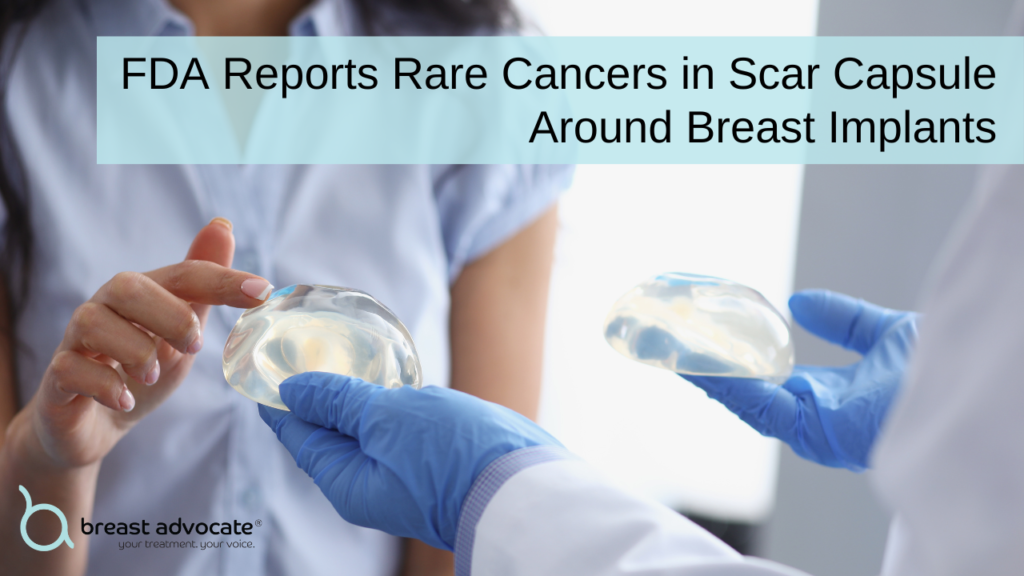
According to a recent report from the U.S. Food and Drug Administration (FDA), squamous cell carcinoma (SCC) and various lymphomas may develop in the capsule that forms around breast implants. The lymphomas are not the same as the breast implant-associated anaplastic large cell lymphoma (BIA-ALCL) that prompted previous FDA announcements. The FDA learned about the newly associated cancer during a post-market review of breast implants.
It is very important to know that these cancers are extremely rare. Less than 20 cases of SCC and fewer than 30 cases of lymphoma were found in the capsule around a breast implant.
“After an initial extensive review, we currently believe that the risk [for squamous cell carcinoma] and other lymphomas occurring in the tissue around breast implants is rare,” said Binita Ashar, MD, director of the Office of Surgical and Infection Control Devices in the FDA’s Center for Devices and Radiological Health. “However, in this case, and when safety risks with medical devices are identified, we wanted to provide clear and understandable information to the public as quickly as possible.”
The Type of Implant Probably Doesn’t Matter
The type of implant appears to be irrelevant – all types of implants (smooth, textured, saline, and silicone) have been linked to SCC and lymphomas in the scar capsule around the implants. In some cases, women were diagnosed years after the placement of their implants. Some signs and symptoms include swelling, pain, lumps, or skin changes.
If you are considering breast implants or currently have them, the FDA recommends the following:
- Ensure you are fully educated about the risks and benefits of breast implants.
- Be aware that cases of SCC and various lymphomas in the capsule around the breast implant have been reported, but they are rare.
- You should monitor your breasts and implants by regular self-exam and contact your plastic surgeon about any changes.
- File a report through MedWatch if you experience any problems.
What Doctors Should Know
If you are a healthcare professional caring for patients with breast implants, the FDA recommends you:
- Be aware that cases of SCC and lymphomas in the capsule around the breast implant have been reported.
- When examining breast implant specimens for diagnostic evaluation, characterize all findings and potential diagnoses.
- Report cases of SCC, lymphomas, and any other cancers in the capsule around the breast implant to the FDA.
The FDA said their consumer and healthcare recommendations don’t affect the previously provided suggestions on BIA-ALCL. They are continuously assessing the post-market safety of approved breast implants and will communicate any findings as soon as new information is available.
If you would like to learn more about ALL your breast reconstruction options, download the Breast Advocate App free today!
Breast Cancer: When to Get a Second Opinion?

Considering a second opinion? It is important to know you can get a second opinion at any time during your treatment. This can be very helpful to ensure you are as comfortable as possible with your treatment plan. If you are considering getting another opinion however, we recommend you do so at the beginning of your cancer care if possible to allow for a change in treatment if needed.
“Anytime a patient is given a diagnosis that is maybe not the most common, or maybe has some intricacies or nuances, then it’s probably a good idea to meet with multiple physicians who can give opinions on treatment plans for that unique diagnosis,” says Dr. Jessica Burns, a breast cancer surgeon for ProMedica, and Dr. Christopher Lutman, a gynecologic oncologist with Mercy Health in a recent article.
At first, it might feel like you are doubting your doctor’s judgment, however, it’s a fairly common request that doctors are used to hearing.
When to Consider a Second Opinion
- After biopsy results: The biopsy involves taking a small sample of the breast mass or area of concern to examine it for malignant (cancerous) cells. Any discrepancy by the pathologist who interprets the results could make a difference in your diagnosis and the treatment approach the is recommended. When considering a second pathology opinion, check the service is “in-network” and covered by your insurance plan.
- Before surgery: Getting a second opinion from another breast surgeon or plastic surgeon can be helpful if you are unsure about the type of breast cancer surgery or reconstruction you should have. The decision between having a lumpectomy or mastectomy, and equally choosing aesthetic flat closure or breast reconstruction, can be extremely personal. There is often no “right” or “wrong”; only what is best for you. Given the variety of breast reconstruction options available, it is a good idea to consult with more than one plastic surgeon if you are considering reconstruction, especially if you are considering of the more complex procedures like the DIEP flap. Just as some breast surgeons don’t offer oncoplastic surgery at the time as a lumpectomy, some plastic surgeons don’t offer microsurgical flap options.
- When planning treatment after surgery: Treatment options after surgery can include chemotherapy, radiation therapy, hormonal therapy, and targeted therapies. The best treatment for you will depend on the details of your diagnosis, the pathology results from surgery, and your individual needs. Sometimes, the recommendations can be very clear-cut based on well-established guidelines. Occasionally, the situation isn’t so clear and a second opinion from another specialist can be very helpful to help you navigate your options.
- During treatment: If the treatment plan isn’t working, you have treatment-related issues your doctor can’t resolve, or you aren’t comfortable with an aspect of your care, it’s likely worth seeking a second opinion.
- After treatment: Even if you’ve already finished treatment, you may still benefit from an alternative perspective when it comes to a survivorship care plan. Unfortunately, it’s after treatment that many patients feel the most lost. If you don’t feel you have the support or guidance you need from your medical team, it may be beneficial to get a second opinion.
Helpful Resources
If you are already confident with your original physician’s/team’s treatment recommendations, that’s great! Other resources you can explore that can provide additional support include reputable online support groups and the Breast Advocate App.
Aesthetic Flat Closure: What You Need to Know

A recent study in PRS Global Open shows an increasing trend in women choosing aesthetic flat closure after a mastectomy. This is the decision to remove both breasts and create a truly flat chest wall contour instead of having breast reconstruction. There are many potential reasons someone may make this choice, including the desire:
– to avoid breast implants
– to avoid the additional scarring associated with flap surgery
– to decrease recovery time and time off work
– to minimize the number of surgeries
– to decrease the risk of complications
– to minimize out-of-pocket costs
Regardless of the type of mastectomy being performed, all mastectomies remove the breast tissue. However, many women are unhappy with the way their chest appears after a mastectomy without reconstruction, due to residual skin folds or tissue (known as “dog ears”) that is often left behind by traditional techniques.
Unfortunately, some patients report they were not given the choice to go flat by their surgeons. Others have experienced “flat denial” – this is when “a surgeon’s unilateral actions deny their patient the agreed-upon flat closure, either through negligence or intentional disregard” (NotPuttingonaShirt.org).
Thoroughly discussing your preferences and expectations with your surgical team ahead of time is important to ensure that, if needed, certain surgical techniques are incorporated to provide the best final contour and a true cosmetically-appealing flat result.
Due to the increasing demand for flat closures after mastectomy, there has been a welcomed increase in focus within the plastic surgery community on improving patient outcomes after going flat.
Who is a candidate for aesthetic flat closure?
People in the following situations may wish to consider going flat:
– anyone considering mastectomy because of a breast cancer diagnosis
– anyone considering prophylactic (risk-reducing) surgery because they are at high risk of developing breast cancer
– those who have already had surgery as part of their breast cancer treatment and now wish to be symmetric without reconstruction, with a truly flat chest contour
– anyone who has had breast reconstruction already, is unhappy with their results, and now prefers to go flat instead
Who offers aesthetic flat closure?
Aesthetic flat closure may be performed by a breast cancer surgeon alone or in collaboration with a plastic surgeon colleague.
Many of the techniques used to ensure a flat chest contour are actually plastic surgery techniques (eg V-Y advancement, local tissue rearrangement). Due to the increase in awareness of aesthetic flat closure in the breast cancer community, these techniques are more widely discussed and taught as part of breast surgery training. This will hopefully lead to more surgeons feeling comfortable offering this procedure.
Plastic surgeons are also often asked to perform revision surgery if an aesthetic flat closure was not performed at the time of the mastectomy.
Tips on making a breast surgery choice
When considering aesthetic flat closure, or any other surgical procedure, it’s important to:
– Take the time you need to research all your options using reputable sources.
– Look at before and after photos to help you figure out how you’d like to look.
– Research your surgeon to ensure they routinely perform the procedure you choose.
– Talk extensively with others who have had the surgery you are considering, preferably with the same surgical team.
By asking these questions and taking the time to research your options, you will maximize your chances of having a good outcome that meets your expectations.
Does my insurance cover aesthetic flat closure?
Insurance companies typically cover going flat as part of breast cancer-related or risk-reducing mastectomies. Prior to scheduling surgery, it’s important to speak with your insurance company and make sure your surgical team has confirmed that it will be covered by insurance.
Download our FREE Breast Advocate App to learn more about going flat (aesthetic flat closure).
Does Hormone Replacement Therapy Lead to Breast Cancer?
What is HRT?
According to the Mayo Clinic, hormone replacement therapy is a medication that contains female hormones. You take the medication to replace the estrogen that your body stops making during menopause. Hormone therapy is most often used to treat common menopausal symptoms, including hot flashes and vaginal discomfort.
The Science Behind the Study
Aromatase inhibitors can have a variety of side effects, including genitourinary problems associated with menopause such as vaginal dryness, itchiness, burning, overactive bladder, and urinary incontinence. Although these symptoms may be alleviated by the use of vaginal estrogen therapy (VET) or menopausal hormone therapy (MHT), there are concerns the therapies can increase the risk of breast cancer recurrence and death following treatment.
A large Danish observational cohort study concluded neither VET or MHT is linked with an increased risk of recurrence or mortality. However, a subgroup analysis discovered a higher risk of recurrence in women undergoing VET with adjuvant aromatase inhibitors, but not a higher risk of mortality.
Study Methods
The study included 8,461 postmenopausal Danish women between the ages of 35 to 95 years old who had been diagnosed with early-stage invasive ER-positive breast cancer between 1997 and 2004. Chemotherapy had not been given to the women. The individuals were randomly assigned to receive either 5 years of tamoxifen or an aromatase inhibitor, or both treatments in a sequence.
The researchers determined prescription data on hormone therapy, VET, or MHT from Denmark’s national prescription registry.
What Are the Results?
Among the 8,461 women who did not receive VET or MHT before their breast cancer diagnosis, 1,957 and 133 used VET and MHT after their diagnosis. The median follow-up for recurrence was 9.8 years, and for mortality, it was 15.2 years.
“In postmenopausal women treated for early-stage ER-positive breast cancer, neither VET nor MHT was associated with increased risk of recurrence or mortality. A subgroup analysis revealed an increased risk of recurrence, but not mortality, in patients receiving VET with adjuvant aromatase inhibitors,” concluded the authors of the study.
For more on HRT and breast cancer, head to the American Cancer Society.
The Breast Advocate® App is the World’s first breast cancer surgery shared decision-making app. Download it for free here.
Parabens: May Be the Reasons for Higher Breast Cancer Risk in Black Women
According to new research, chemicals called parabens, which are common ingredients in everyday hair and personal care products, can encourage breast cancer cells in Black women.
In the United States, one in eight women will get breast cancer during their lifetime. Black women are more likely than any other racial or ethnic group to develop breast cancer before the age of 40.
“One reason for the higher risk of breast cancer may be exposure to harmful chemicals called endocrine-disrupting chemicals in hair and personal care products. These chemicals mimic the effects of hormones on the body.” shares lead researcher, Lindsey S. Treviño, Ph.D.
What Are Parabens?
Parabens are common preservative ingredients used in cosmetic, personal hygiene, and food products to prevent the growth of bacteria and other microorganisms. The greatest exposure is believed to be through personal care products. Parabens enter the body via the skin or digestive system and have been detected in human tissues, blood, breast milk, placenta, and urine.
The Science Behind the Study
The study tested the effects of parabens on breast cancer cells from Black women. In both Black and white women, parabens increased expression of genes linked to hormone action in breast cancer cell lines. However, parabens only increased the growth of certain breast cancer cells in black women.
“These results provide new data that parabens also cause harmful effects in breast cancer cells from Black women,” Treviño said.
“While this project focuses on Black women, the knowledge we gain about the link between exposure to harmful chemicals in personal care products and breast cancer risk can be used to help all women at high risk of getting breast cancer,” concludes Treviño.
What Are the Top Tips to Avoid Exposure?
- Look for products labeled as “paraben-free.”
- Choose products that do not contain water as these don’t need preservatives.
- Avoid products that list parabens as ingredients. There are many different types. Some common parabens to look out for include:
- Propylparaben
- Butyparaben
- Ethylparaben
- Methylparaben
- Look for natural alternatives like grapefruit seed extract, honey, jojoba and vitamins A, C, and E.
- Choose USDA organic personal and cosmetic products that are free of parabens and chemical preservatives.
If you are facing surgery for breast cancer we want you to know you are not alone. Breast Advocate® provides evidence-based information and customized recommendations based on your diagnosis, personal preferences and values. It’s your treatment… our mission is to empower you to have the conversation you want to have with your doctors. Download the latest version of the Breast Advocate® app today.
Signs and Symptoms of Breast Cancer in Men
Breast cancer in men is rare, affecting about 2,600 men in the United States every year. Less than 1% of breast cancers occur in men. Male breast cancer can occur at any age, however, it is more common in older men over the age of 60. Men can also carry gene mutations (eg BRCA) that increase their risk of developing breast cancer and other types of cancer.
Male breast cancer grows in a man’s breast tissue. Male breasts can’t produce milk but they do have fatty tissue, duct, and breast cells. The cancer develops when abnormal cells grow uncontrollably in breast tissue which forms a tumor. The tumor can also spread to other parts of the body, known as “metastatic disease”.
Causes and Risk Factors
Risk factors for male breast cancer include:
- Being over the age of 50.
- Having certain genetic mutations (BRCA1 and BRCA2).
- A family history of breast cancer.
- Taking estrogen therapy.
- Having radiation therapy that targets the chest.
- Having Klinefelter syndrome is a rare genetic condition that causes a man to have an additional X chromosome.
- Testicle injuries or surgery.
- Being overweight or obese.
- Having liver disease, especially cirrhosis.
What Are the Types of Male Breast Cancer?
- Invasive ductal carcinoma
- Invasive lobular carcinoma
- Ductal carcinoma in situ (DCIS)
- Inflammatory breast cancer
- Paget’s disease of the nipple
What Are the Most Common Signs of Breast Cancer in Men?
Men don’t typically get regular mammogram scans like women, therefore, a physical sign of breast cancer will usually be the first thing a man or a partner notices:
- A lump or swelling, which is often (but not always) painless
- Skin dimpling or puckering
- Nipple retraction (turning inward)
- Redness or scaling of the nipple or breast skin
- Discharge from the nipple
If you notice any of these signs or something else that concerns you, it is very important that you schedule an appointment with your doctor as soon as possible.
Treatment Options
Treatment for breast cancer in men depends on the type of cancer and how advanced it is. Treatment usually beings with surgery to remove the tumor and, in many cases, all the breast tissue (mastectomy) and some of the axillary (armpit) lymph nodes.
It is important to discuss all of your options with your doctor and ask questions such as:
- What treatments are appropriate for me? What do you recommend?
- How long will treatment last?
- What risks or side effects should I expect?
- What should I do to prepare for treatment?
- How much experience do you have treating this type of cancer?
- Should I get a second opinion?
- How soon do I need to start treatment?
Know All Your Options
If you are a man or woman who has been diagnosed with breast cancer, or you are considering surgery to decrease your risk of breast cancer – Breast Advocate® is for you. Breast Advocate® is a free app that provides ALL your surgical options along with evidence-based recommendations, personalized for you.
Download the latest version of the Breast Advocate® app here.
Does MS Affect Breast Cancer Diagnosis and Screening?
According to a new study published in the online issue of Neurology®, women with multiple sclerosis (MS) are less likely to have breast cancers detected through routine cancer screenings than women without MS.
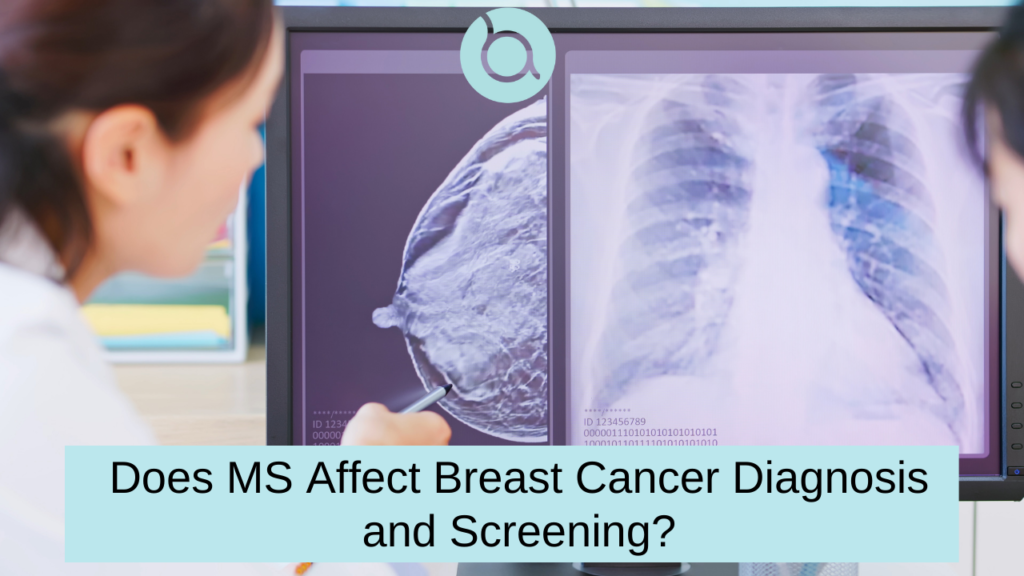
According to a new study published in the online issue of Neurology®, women with multiple sclerosis (MS) are less likely to have breast cancers detected through routine cancer screenings than women without MS.
Researchers looked at health care data for 14.8 million people in Ontario to see if there were any individuals diagnosed with breast or colorectal cancer who also had MS. For the study, they compared 351 women with breast cancer and MS to 1,404 women with breast cancer but no MS. They also identified 54 people with colorectal cancer and MS, and compared these to 216 people with colorectal cancer and no MS.
The team discovered that routine screening revealed breast cancer in 103 (29%) of the women with MS, and in 529 (38%) of the women without MS. After controlling for age, diagnosis year, and income, they found women with MS had a 32% decreased chance of having breast cancer diagnosed through routine screening.
“Disability from MS increases with age, as does cancer risk, so it is likely that those with MS may find it more difficult to get regular mammograms as they get older,” said study author Ruth Ann Marrie, MD.
Researchers also discovered that 21% of people with MS and breast cancer, and 33% of those with MS and colorectal cancer, had a level of impairment that required long-term care. “More research is needed regarding the role of MS-related disability on screenings,” states Marrie.
One limitation was the study did not include the time period from when a person first noticed cancer symptoms to when they told their doctor. “People experiencing marginalization due to race or ethnicity have different access to cancer screening, and this may be exacerbated among people with MS,” said Marrie. She stated that race and ethnicity data were not accessible for this study and that future research should look into it.
General Breast Cancer Screening Guidelines
Regular screenings can help find cancers earlier before they have a chance to spread. Below are the American Cancer Society’s recommendations on breast cancer screening:
- Women ages 40 to 44: If they choose, they should start annual breast cancer screening early with mammograms.
- Women ages 45 to 54: Should get mammograms every year.
- Women ages 55 and older: Should get mammograms every 2 years, however, annual screening can be continued.
Breast Cancer – What Symptoms Should I Take Seriously?
According to the CDC, some of the warning signs of breast cancer include:
- New lump in the breast or underarm (armpit).
- Thickening or swelling of part of the breast.
- Irritation or dimpling of breast skin.
- Redness or flaky skin in the nipple area or the breast.
- Pulling in of the nipple (known as “nipple retraction”), or pain in the nipple area.
- Nipple discharge other than breast milk, including a bloody discharge.
- Any change in the size or the shape of the breast.
- Pain in any area of the breast.
If you notice any of these symptoms or something else that concerns you, schedule an appointment with your doctor right away.
If you are facing surgery for breast cancer, or are considering surgery to decrease your risk of developing breast cancer – Breast Advocate® is for you.
Breast Cancer Patients Long-Term Quality of Life After Breast Conservation vs. Mastectomy and Reconstruction

Women facing surgery after a breast cancer diagnosis have the option of removing the entire breast (mastectomy) or only the affected breast tissue (lumpectomy). Regardless of which type of surgery a patient chooses, research shows both groups of women are equally satisfied with their breasts 10 years after surgery.
However, there were two areas where breast conservation patients and mastectomy patients differed: women who had a lumpectomy along with adjuvant radiation therapy (also known as “breast conservation”), reported better psychological and sexual well-being 10 years after surgery than those who underwent mastectomy and reconstruction.
“These findings may inform preference-sensitive decision-making for women with early-stage breast cancer,” explains Dr. Benjamin D. Smith, of The University of Texas MD Anderson Cancer Center.
According to a similar study, these findings “have substantial implications for patient decision-making, given that more women eligible for breast-conserving surgery are opting for a mastectomy,” shares Dr. Sudheer Vemuru, of the University of Colorado School of Medicine, Aurora.
“Overall, the preponderance of evidence suggests superior short-term and long-term patient-reported outcomes in patients with early-stage breast cancer undergoing breast-conserving surgery compared with mastectomy,” adds Dr. Vemuru.
Regardless of what type of surgery a patient ultimately chooses to have, if they are fully informed of ALL their options, they are far more likely to be satisfied with their overall outcome and feel they made the best choice for them. Patients and medical providers must work together to decide what surgical procedure(s) best meets the patient’s outcome goals and lifestyle.
Questions to Ask Your Doctor When Considering Breast Conservation vs Mastectomy and Reconstruction
If you don’t understand what your physicians or nurses are saying, don’t be scared to let them know your concerns. When you see your doctor, you may want to bring another person with you and have them take notes to help you remember what was said. Here are some questions to ask to better understand your options:
- Is breast-conserving surgery (lumpectomy) an option for me? Why or why not?
- What are the pros and cons of breast-conserving surgery versus mastectomy, with or without reconstruction?
- How many surgeries like mine have you done?
- Do I need lymph nodes removed? If so, how many and what are the risks?
- How long will I be in the hospital?
- How should I care for the surgery site? Will I need someone to help me?
- What will my breasts look and feel like after my surgery? How will the procedure impact my feeling?
- What will the scar(s) look like? Can they be hidden around the areola or in the breast crease?
More questions for your breast surgeon can be found here.
The Importance of Shared Decision Making
Shared decision-making occurs when the health care professional and patient work together to make a treatment decision that is best for the patient. The best decision takes into account evidence-based information about treatment options, the physician’s knowledge and experience, and the patient’s preferences and values. Multiple studies show this collaborative approach improves patient outcomes and satisfaction.
Shared decision-making is a method where both the patient and physician participate in the medical decision-making process together. To arrive at the best treatment plan for the patient, this approach considers all evidence-based treatment options and associated risks, the physician’s expertise, together with the patient’s preferences, values, and expectations.
Download the latest version of the Breast Advocate app here.
Low Vitamin D Levels Increase Breast Cancer Risk in Minority Women
Low vitamin D levels may play a role in developing breast cancer, particularly in minority women.
The immune-boosting benefits of vitamin D are well-known and several prior studies have looked at the impact of low vitamin D levels on various diseases.
According to a new study, Black and Hispanic American women with low vitamin D levels have a greater risk of breast cancer than those with adequate vitamin D levels. Having enough vitamin D may therefore help decrease the risk of breast cancer in minority women.
Study Results
Katie O’Brien, Ph.D., and colleagues looked at blood samples from 290 Black and 125 Hispanic women who later developed breast cancer. They also collected samples from 1,010 Black and 437 Hispanic women who did not develop breast cancer.
Over a nine-year period, women with sufficient vitamin D levels had a 21% lower breast cancer rate than women with vitamin D deficiency. The study found the link between vitamin D and breast cancer risk was highest in Hispanic women, who had a 48% decreased risk of breast cancer if they had sufficient vitamin D levels.
Enhanced Health Benefits
“Because women who identify as members of these groups have lower vitamin D levels, on average than non-Hispanic White women, they could potentially receive enhanced health benefits from interventions promoting vitamin D intake,” explains study co-author Katie O’Brien, of the U.S. National Institute of Environmental Health Sciences. “However, questions remain about whether these associations are truly causal and, if so, what levels of vitamin D are most beneficial.”
How to Increase Your Vitamin D levels
Spending enough time outdoors in the sunshine is very important as your body naturally produces vitamin D when your skin is exposed to direct sunlight. Taking a regular supplement can also help increase your vitamin D levels, along with including certain foods in your diet, such as:
- Oily fish (eg salmon, sardines)
- Red meats
- Eggs (especially egg yolks)
- “Fortified” foods (eg some breakfast cereals)
More Information
To learn more about vitamin D and cancer prevention, visit the U.S. National Cancer Institute.